-
Mental diseases
Many people get mental disorders due to many reasons and one of them is the high mental pressure, so they cannot live normally anymore and they cannot control their situation. Consequently they become homeless and they lose all their belongings.
-
DRUG/ALCOHOL ADDICTION
Some homeless people suffer from addictions to alcohol and drugs.
Sometimes addiction is a cause of homelessness.
Sometimes homelessness is a cause of addiction.
Recovery from addiction, without a place to live, is unlikely.
“she's 18 and has been homeless and on the streets of Vancouver since she turned 16 and was kicked out of a foster home...Unable to qualify for social assistance, she's turned to prostitution for income and multiple drugs to forget…” —Interviewer On our streets and in our shelters…Results of the 2005 Greater Vancouver Homeless Count
-
LOSING JOB
One reason of becoming homeless is losing the job. As people
lose their job they have to more money to spend on housing and
they consequently lose all their belongings after a while.
-
State law
As we all know the price of housing increases every year and
then if the person is not able to increase the income they will
lose their house and everything.
Portland Homeless Crisis
By Carter Scott
In 2011, the annual telephone poll commissioned by the Portland Business Alliance polled people on the biggest issues facing the city. The results showed that what people considered were the most pressing problems involved recent traffic congestion, and unaffordable housing. 1% of people polled listed homelessness as the biggest issue in Portland. In December of 2018, when the poll was taken again, 33% of people pinned the largest problem on the homeless crisis.
The homeless population in Portland is greatly increasing each year, and from 2015 to 2017, the city saw a 10% rise in people experiencing chronic homelessness. Now, more than 14,000 Portland residents are without homes, and a quarter of them are in families with children.
More so in Portland than in other cities, the homeless crisis is largely due to inaccessible housing. Nationally, chronic homelessness has decreased 11% from 2007 to 2014, but in Portland, the number has only grown, despite the many services the city provides attempting to reach out.
Many aspects combine to forge what we know presently as the homeless crisis in Portland, but the most undeniable factor is the steep cost of living in the city. There is no denial that Portland is constantly growing and having a hard time keeping up with the needs of the populace (traffic congestion is another prime example), and this has been partly due to the influx of Washington residents moving South from the Seattle area to escape the infamously expensive cost of living. In response to the country-wide migration to Oregon and Portland specifically, the city raised property cost and taxes to deter new movers and to make sure it was collecting enough from residents to support other facets of change, such as the traffic issue. Little or no thought was put into the currently and borderline homeless population, and how this would further diminish their efforts to gain - and hold onto - affordable housing. While currently, measures are being taken to ensure that more people have homes and the stability to work jobs, such as the raising of Oregon’s minimum wage, and the construction of tiny homes, shelters are only one step in the process of recovering from homelessness. Stability is very expensive. It’s almost impossible to find housing in a one or two-bedroom apartment for under $750, add onto that the first and last month’s rent down, and a security deposit, and you have months and months of saving to do. Shelters and tiny homes provide a starting ground, but with much of homeless mental health being ignored and untreated, along with physical exhaustion from lack of nourishment, it can be extremely difficult to keep a job and save.
The homeless problem, while still increasing in severity, is being worked on, mostly by the community and nonprofit organizations. While land is still being granted to the tiny home projects, and organizations continue to reach out and offer their services, the crisis is being dealt with. Additionally, Senate Bill 1532 working to slowly raise our minimum wage will allow people without homes to save more while satisfying their basic needs, which is vital towards escaping the situations they face.

|
Homeless Crisis Crossword.pdf Size : 167.342 Kb Type : pdf |
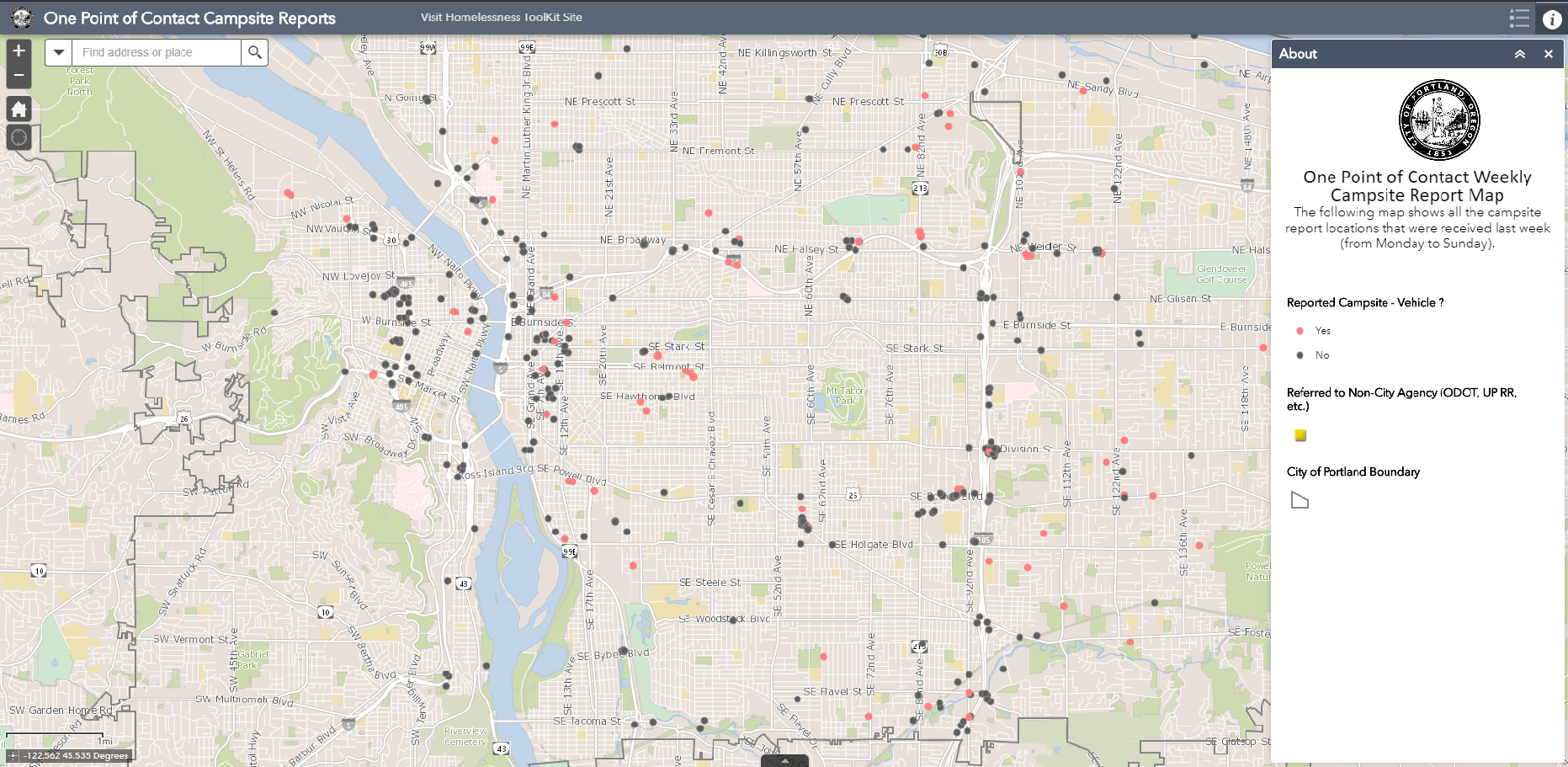
THE CITY OF PORTLAND OREGON - HOMELESS CAMPSITE
Campsite reports in the last 14 day
WEEKLY CAMPSITE REPORT
July 15 – July 21, 2019
1019 new campsite reports identifying roughly 225 campsites throughout the City.
Of these reports:
• 164 were reports of people living in vehicles
WEEKLY CAMPSITE REPORT
July 29 – August 4, 2019
1032 new campsite reports identifying roughly 225 campsites throughout the City.
Of these reports:
• 175 were reports of people living in vehicles.
© Copyright Homeless Crisis